Molecular Biology, Genetics & Bioengineering · Sabancı University

How cancer cells control which proteins get made — and how to stop them.

We study translational control and post-transcriptional gene regulation in cancer, with a focus on prostate cancer. Our goal is to uncover how oncogenic signals rewire the protein-synthesis machinery and to turn those dependencies into RNA-targeted therapies.

m⁷G 3′ 5′ UTR structure → selective translation
EMBO Installation Grant2026
BAGEP AwardScience Academy, 2026
TÜBA-GEBİP AwardTurkish Academy of Sciences, 2025
L'Oréal–UNESCO For Women in ScienceTürkiye, 2025
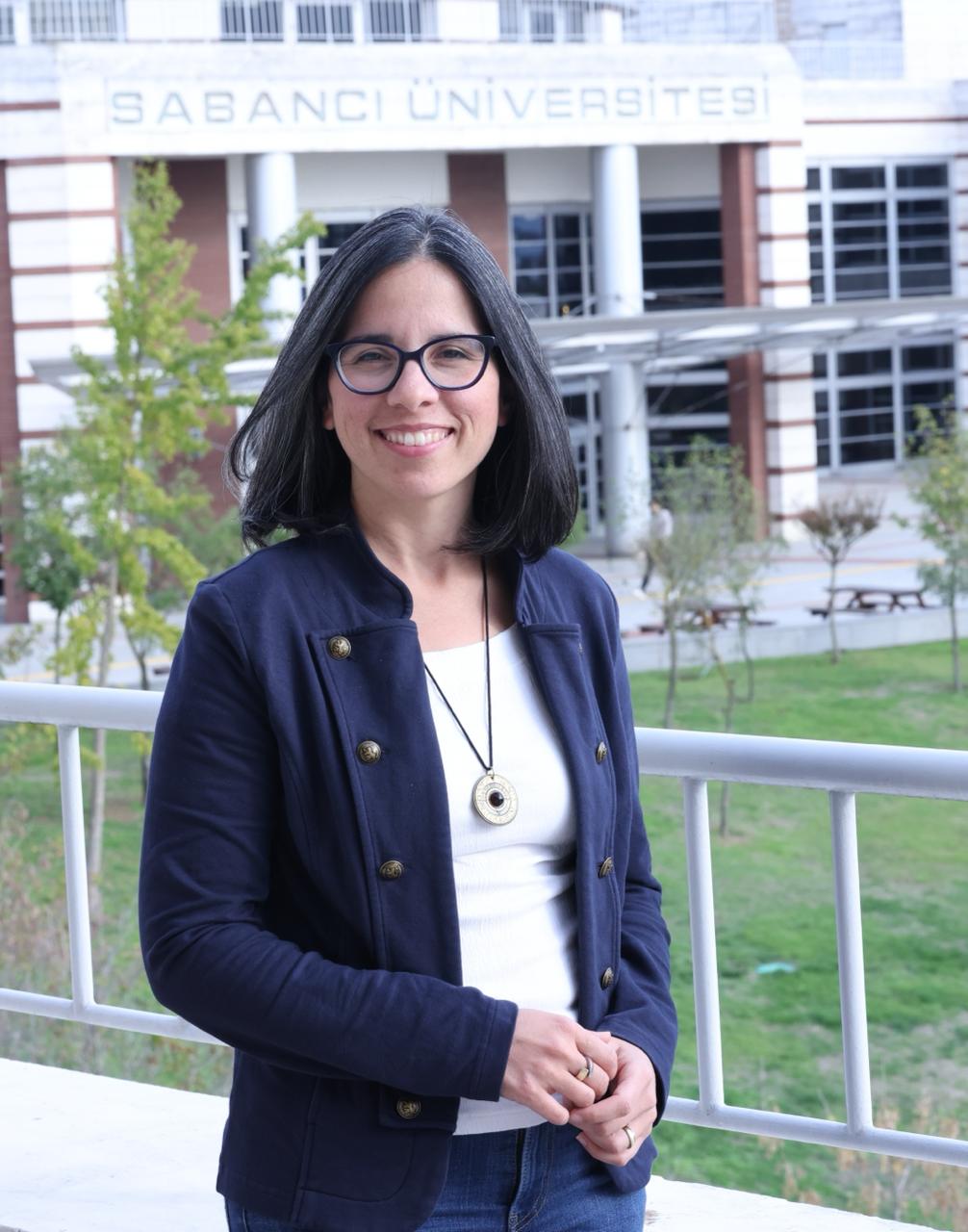
Dr. Duygu Kuzuoğlu Öztürk

Principal Investigator

Dr. Duygu Kuzuoğlu Öztürk

Faculty Member, Molecular Biology, Genetics & Bioengineering
Faculty of Engineering and Natural Sciences, Sabancı University, İstanbul

Duygu is a molecular biologist whose work centres on how gene expression is controlled after transcription — how cells decide which mRNAs are translated into protein, and how cancer cells hijack that decision. She joined Sabancı University in early 2025 to establish her independent laboratory and continues her long-standing collaborations at the University of California, San Francisco (UCSF).

Her doctoral research at the Max Planck Institute for Developmental Biology in Tübingen, in the laboratory of Elisa Izaurralde, dissected how microRNAs and the CCR4–NOT deadenylase complex silence their target mRNAs. As a postdoctoral fellow and scientist in Davide Ruggero's laboratory at UCSF, she turned to translational control in cancer: she carried out a genome-wide screen for eIF4E genetic interactors that reveal cancer-specific vulnerabilities, defined N-myc–driven translation as a therapeutic weakness in medulloblastoma, and showed that the clinical eIF4A inhibitor zotatifin remodels 5′ UTR RNA structure to block oncogene translation in lethal prostate cancer — an approach she calls translatome therapy.

  • 2025 – presentFaculty Member · Sabancı University, İstanbul
  • Postdoc & ScientistUniversity of California, San Francisco · Ruggero Lab, Dept. of Urology & Helen Diller Family Comprehensive Cancer Center
  • PhDMax Planck Institute for Developmental Biology · Tübingen, Germany (Izaurralde Lab)
  • MScBiological Sciences & Bioengineering · Sabancı University
  • BScMolecular Biology & Genetics · İstanbul Technical University

Postdoctoral support included an EMBO Long-Term Fellowship, an HFSP Postdoctoral Fellowship, a UCSF Prostate Cancer Program award, and funding from the U.S. Department of Defense Prostate Cancer Research Program.
Research

From mRNA regulation to new cancer therapies

RNA levels often poorly predict how much protein a cell makes. We work at that gap — on the mechanisms that select which mRNAs are translated, and on how tumours depend on them.

01

Translatome therapy in prostate cancer

Castration-resistant prostate cancer depends on the continued production of oncogenic proteins such as the androgen receptor (AR) and HIF1α. We study how translation factors like the RNA helicase eIF4A select these mRNAs through their 5′ UTR structure, and how small molecules that reshape RNA structure can shut down their translation and sensitise tumours to anti-androgen and radiation therapy.

eIF4A5′ UTR structureARSmall-molecule RNA therapeutics
02

Post-transcriptional control of oncogenic signalling

Signalling pathways that drive prostate cancer progression, including WNT signalling, are regulated well beyond transcription. We map how these pathways are controlled at the level of mRNA translation and stability, and investigate a previously unrecognised function of a key prostate cancer oncogene as a route to new therapeutic strategies.

WNT signallingOncogenesTherapeutic targets
03

The translation machinery as a cellular hub

The cap-binding protein eIF4E is required to translate all eukaryotic genomes, yet it is also a potent oncogene. Building on a genome-wide CRISPRi screen that uncovered more than 600 eIF4E genetic interactions, we explore how translation is wired to autophagy, mitochondrial stress responses and mRNA processing to sustain cancer cell fitness.

eIF4ECRISPR screensAutophagyMitochondrial stress
04

Mechanisms of mRNA silencing and decay

Our foundations lie in the biochemistry of mRNA turnover: how microRNA-induced silencing complexes recruit the CCR4–NOT and PAN2–PAN3 deadenylases, displace PABP and repress translation. These mechanisms continue to inform how we think about selective gene regulation in disease.

CCR4–NOTmiRNA silencingDeadenylation

News

Recognition & milestones

  • Sep 2026

    ServiceScientific Committee, MolBiyoKon'26

    Duygu served on the scientific committee of the 10th International Congress of the Molecular Biology Association of Turkey, held 17–19 September 2026 at Acıbadem University, İstanbul.

    Congress website →
  • 2026

    AwardScience Academy Young Scientist Award (BAGEP 2026)

    Selected as one of 37 early-career researchers across Türkiye for the Science Academy's BAGEP award, which provides two years of research support. The 2026 ceremony was hosted at Sabancı University.

  • Jan 2026

    GrantEMBO Installation Grant

    One of 10 scientists selected for the 2026 EMBO Installation Grants, and the only project from Türkiye. The five-year award (€50,000 per year) supports a project investigating a previously unknown function of an oncogene central to prostate cancer and developing new therapeutic approaches.

    Read the announcement →
  • 2025

    AwardTÜBA-GEBİP Outstanding Young Scientist Award

    Awarded by the Turkish Academy of Sciences for a project on how the WNT signalling pathway is regulated at the post-transcriptional level in prostate cancer. The award was presented at a ceremony at the Presidential Complex in Ankara.

    TÜBA announcement →
  • Oct 2025

    AwardL'Oréal Türkiye–UNESCO For Women in Science Award

    One of four scientists honoured in the 23rd L'Oréal Türkiye "For Women in Science" programme, for a project investigating the protein-synthesis control mechanisms of castration-resistant prostate cancer and translating them into therapy.

    Read the announcement →
  • Mar 2025

    PaperTranslatome therapy for lethal prostate cancer — Cancer Cell

    Our study shows that the clinical eIF4A inhibitor zotatifin remodels the 5′ UTR structure of AR and HIF1α mRNAs, blocking their translation, reducing tumour burden and enhancing anti-androgen and radiotherapy responses. The work was highlighted in Nature Reviews Drug Discovery and Nature Reviews Molecular Cell Biology.

    Read the paper →
  • 2025

    GrantTÜBİTAK 2232-A International Leading Researchers Program

    A 36-month project, "Understanding Novel Connections Between the Translation Machinery and Distinct Cellular Processes", funded to establish the lab's research programme at Sabancı University.

    Read the announcement →
  • Early 2025

    LabThe lab opens at Sabancı University

    Duygu joined the Molecular Biology, Genetics & Bioengineering programme at Sabancı University's Faculty of Engineering and Natural Sciences.

Funding

Current support

We are grateful to the organisations that support our research.

EMBO

Installation Grant

2026–2030 · €50,000 per year for five years to support the long-term development of the lab's independent research programme.

TÜBİTAK

2232-A International Leading Researchers

36-month project on the connections between the translation machinery and distinct cellular processes.

TÜBA · Science Academy

GEBİP & BAGEP awards

Early-career research support from the Turkish Academy of Sciences (2025) and the Science Academy (2026).

Publications

Selected publications

For a complete list, see Google Scholar.

2025
Small-molecule RNA therapeutics to target prostate cancerCo-first author
Kuzuoglu-Ozturk D, Nguyen HG, Xue L, Figueredo E, Subramanyam V, … Ruggero D.
Cancer Cell 43(5):841–855 (2025)
Androgen receptor inhibition increases MHC class I expression and improves immune response in prostate cancer
Chesner LN, Polesso F, Graff JN, … Kuzuoglu-Ozturk D, … Feng FY, Moran AE.
Cancer Discovery 15(3):481–494 (2025)
2023
Evolutionarily divergent mTOR remodels translatome for tissue regeneration
Zhulyn O, Rosenblatt HD, Shokat L, Dai S, Kuzuoglu-Öztürk D, Zhang Z, et al.
Nature (2023)
N-myc–mediated translation control is a therapeutic vulnerability in medulloblastomaFirst author
Kuzuoglu-Ozturk D, Aksoy O, Schmidt C, Lea R, Larson JD, Phelps RRL, et al.
Cancer Research (2023)
2022
Protein synthesis control in cancer: selectivity and therapeutic targeting
Kovalski JR, Kuzuoglu-Ozturk D, Ruggero D.
The EMBO Journal 41(8):e109823 (2022) · Review
Localization of a TORC1-eIF4F translation complex during CD8+ T cell activation drives divergent cell fate
Liedmann S, Liu X, Guy CS, Crawford JC, Rodriguez DA, Kuzuoğlu-Öztürk D, … Green DR.
Molecular Cell 82(13):2401–2414 (2022)
2021
Revealing molecular pathways for cancer cell fitness through a genetic screen of the cancer translatomeFirst author
Kuzuoglu-Ozturk D, Hu Z, Rama M, Devericks E, Weiss J, Chiang GG, Worland ST, Brenner SE, Goodarzi H, Gilbert LA, Ruggero D.
Cell Reports 35(13):109321 (2021)
2016
miRISC and the CCR4–NOT complex silence mRNA targets independently of 43S ribosomal scanningFirst author
Kuzuoğlu-Öztürk D, Bhandari D, Huntzinger E, Fauser M, Helms S, et al.
The EMBO Journal (2016)
2014
A DDX6-CNOT1 complex and W-binding pockets in CNOT9 reveal direct links between miRNA target recognition and silencing
Chen Y, Boland A, Kuzuoğlu-Öztürk D, Bawankar P, Loh B, Chang CT, … Izaurralde E.
Molecular Cell 54(5):737–750 (2014)
2013
Structure and assembly of the NOT module of the human CCR4–NOT complex
Boland A, Chen Y, Raisch T, Jonas S, Kuzuoğlu-Öztürk D, Wohlbold L, … Izaurralde E.
Nature Structural & Molecular Biology 20(11):1289–1297 (2013)
GW182 proteins cause PABP dissociation from silenced miRNA targets in the absence of deadenylation
Zekri L, Kuzuoğlu-Öztürk D, Izaurralde E.
The EMBO Journal 32(7):1052–1065 (2013)
2012
The Caenorhabditis elegans GW182 protein AIN-1 interacts with PAB-1 and subunits of the PAN2-PAN3 and CCR4-NOT deadenylase complexesFirst author
Kuzuoğlu-Öztürk D, Huntzinger E, Schmidt S, Izaurralde E.
Nucleic Acids Research 40(12):5651–5665 (2012)

Author names in bold. Links open the article or its PubMed record.

Teaching & Service

In the classroom and the community

Teaching at Sabancı

  • BIO 303 · Genetics — undergraduate course, Molecular Biology, Genetics & Bioengineering
  • BIO 591 · Directed Research — graduate research supervision

Service

  • Scientific Committee member, MolBiyoKon'26 — 10th International Congress of the Molecular Biology Association of Turkey (2026)
  • Continuing collaborations with the University of California, San Francisco

Join the lab

We are building a new team in İstanbul.

We welcome motivated undergraduate researchers, MSc and PhD students, and postdoctoral fellows who are curious about RNA biology, translational control and cancer. We value rigorous, collaborative and inclusive science.

  • Students: email a short note on your interests and a CV. Sabancı students can also enrol in directed research.
  • Postdocs: send a CV, a brief research statement and contact details for two referees. We are happy to support fellowship applications (e.g. EMBO, MSCA, TÜBİTAK).
  • Collaborators: we are always glad to discuss joint projects.
Email
duygu.kuzuoglu@sabanciuniv.edu
Office
FENS Building, Room 2087
Sabancı University, Orta Mahalle, Tuzla 34956, İstanbul
Programme
Molecular Biology, Genetics & Bioengineering
Schedule a video call